
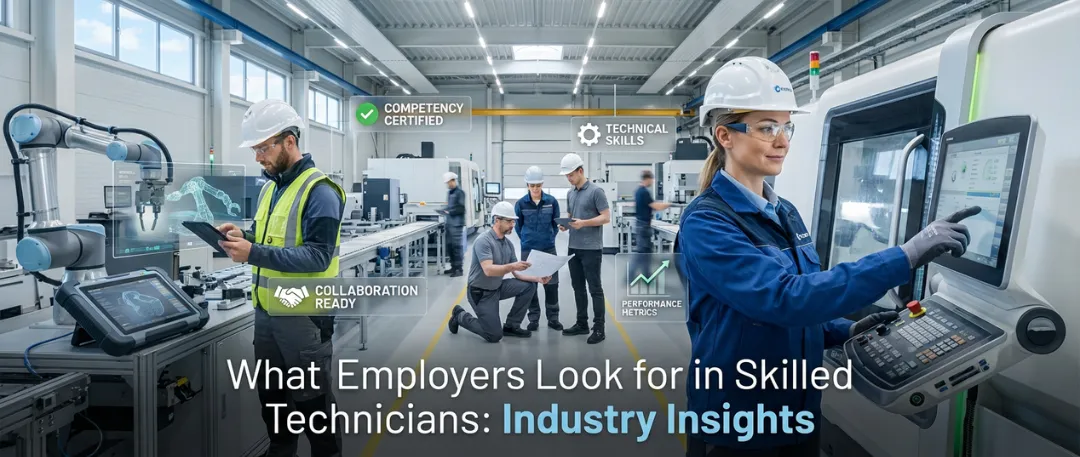
In today’s rapidly evolving industrial landscape, skilled technicians play a critical role in keeping infrastructure, manufacturing, energy, and service sectors running efficiently. From electrical systems and mechanical maintenance to welding, HVAC, and automation, the demand for technically trained professionals continues to grow across industries in India and abroad.
However, employers are no longer focused solely on technical knowledge. While hands-on expertise remains essential, companies increasingly seek well-rounded technicians who combine practical skills with professionalism, adaptability, and a strong work ethic. Understanding what employers truly value can help aspiring technicians prepare better, improve employability, and build long-term, successful careers.
This blog explores key industry insights into what employers look for in skilled technicians and how training institutes and students can align with these expectations.
The Growing Demand for Skilled Technicians
Industrial growth, urban infrastructure development, renewable energy projects, smart manufacturing, and overseas job opportunities have significantly increased the demand for skilled technicians. Sectors such as construction, oil and gas, manufacturing, power generation, facilities management, and automation rely heavily on trained technical professionals.
Employers face a skills gap where job openings exceed the availability of job-ready candidates. As a result, recruiters are highly selective and prioritize technicians who can contribute from day one with minimal supervision.
1. Strong Technical Competency and Hands-On Skills
At the core of every technician’s role is technical expertise. Employers expect candidates to have a solid understanding of tools, equipment, materials, and procedures relevant to their trade.
Key expectations include:
- Ability to read and understand technical drawings and schematics
- Proficiency in using industry-standard tools and machines
- Practical experience with real-world tasks, not just theoretical knowledge
- Familiarity with modern equipment and updated techniques
Employers prefer technicians who have undergone hands-on training in workshops or labs that simulate actual job conditions. Real-time exposure builds confidence and reduces the learning curve at the workplace.
2. Industry-Recognized Certifications and Training
Certifications act as proof of competence and credibility. Employers often shortlist candidates based on recognized trade certifications, especially for overseas placements and regulated industries.
What employers value:
- Completion of certified vocational or industrial training programs
- Compliance with national or international skill standards
- Safety and compliance certifications where applicable
- Trade test readiness and practical assessment performance
Certifications assure employers that a technician meets minimum skill and safety requirements, reducing training risks and operational errors.
3. Workplace Safety Awareness and Compliance
Safety is non-negotiable in industrial environments. Employers prioritize technicians who understand and strictly follow safety protocols to prevent accidents, equipment damage, and legal issues.
Key safety-related qualities include:
- Knowledge of personal protective equipment (PPE)
- Understanding of safety signage and hazard identification
- Ability to follow standard operating procedures (SOPs)
- Awareness of emergency response measures
A technician who demonstrates a safety-first mindset is seen as reliable and responsible, making them a valuable long-term asset.
4. Problem-Solving and Analytical Thinking
Industries rarely operate under perfect conditions. Machines malfunction, systems fail, and unexpected challenges arise. Employers look for technicians who can think critically and solve problems efficiently.
Desired problem-solving traits include:
- Ability to diagnose faults logically
- Understanding root causes rather than temporary fixes
- Willingness to troubleshoot independently
- Capacity to make sound decisions under pressure
Technicians who can analyze situations, suggest improvements, and prevent recurring issues stand out in competitive job environments.
5. Adaptability to New Technologies and Tools
Technology is reshaping traditional trades. Automation, digital diagnostics, smart tools, and advanced machinery are becoming standard across industries.
Employers expect technicians to:
- Be open to learning new tools and technologies
- Adapt to digital systems and automation processes
- Upgrade skills regularly through training or certifications
- Embrace innovation rather than resist change
An adaptable technician remains relevant in the long run and contributes to productivity and efficiency improvements.
6. Communication and Teamwork Skills
Technical expertise alone is not enough in modern workplaces. Technicians often work as part of a team, interact with supervisors, engineers, clients, and safety officers.
Employers value technicians who can:
- Communicate issues clearly and accurately
- Follow instructions and provide feedback
- Work collaboratively with diverse teams
- Maintain professionalism in all interactions
Effective communication reduces errors, improves coordination, and ensures smooth project execution.
7. Discipline, Punctuality, and Work Ethic
One of the most underrated yet critical qualities employers look for is discipline. Technical skills can be taught, but attitude and work ethics are harder to instill.
Employers highly value technicians who demonstrate:
- Punctuality and attendance consistency
- Respect for company policies and hierarchy
- Accountability for assigned tasks
- Commitment to quality and timelines
A disciplined technician earns trust quickly and is often considered for promotions or leadership roles.
8. Physical and Mental Readiness
Many technical jobs require physical stamina, attention to detail, and the ability to work under challenging conditions.
Employers assess:
- Physical fitness for demanding tasks
- Mental alertness and focus
- Ability to work in shifts or remote locations
- Stress management in high-pressure environments
Technicians who maintain health, safety awareness, and emotional stability are more dependable and productive.
9. Willingness to Learn and Grow
Industries evolve, and employers prefer technicians who view learning as a continuous process rather than a one-time requirement.
Employers look for:
- Curiosity and eagerness to improve skills
- Openness to feedback and correction
- Interest in career advancement
- Long-term commitment to professional growth
A learning-oriented technician grows with the organization, reducing turnover and recruitment costs.
10. Professional Conduct and Reliability
Professionalism goes beyond technical ability. Employers seek technicians who represent the organization positively.
Professional traits include:
- Honesty and integrity
- Respect for colleagues and clients
- Proper documentation and reporting habits
- Confidentiality and ethical conduct
Reliable technicians are trusted with responsibility, sensitive tasks, and leadership opportunities.
How Training Institutes Can Align with Employer Expectations
To bridge the gap between education and employment, training institutes must align curricula with industry needs.
Effective training programs focus on:
- Practical, hands-on learning
- Industry-relevant tools and equipment
- Soft skills and workplace readiness
- Safety training and compliance
- Career guidance and placement preparation
Institutes that integrate real-world exposure produce job-ready technicians who meet employer expectations more effectively.
Preparing Yourself for Employer Expectations
Aspiring technicians can take proactive steps to improve employability:
- Choose quality training programs with practical exposure
- Focus on skill mastery, not just certification
- Practice safety habits consistently
- Develop communication and teamwork skills
- Stay updated with industry trends
Being proactive ensures smoother entry into the workforce and faster career progression.
Conclusion
The role of a skilled technician is no longer limited to performing routine tasks. Employers today seek professionals who combine technical excellence with safety awareness, adaptability, communication, and strong work ethics.
Understanding what employers look for empowers technicians to prepare effectively, stand out in job interviews, and build sustainable careers in competitive industries. By focusing on continuous learning and professional growth, skilled technicians can secure long-term success and contribute meaningfully to industrial progress.
FAQs
Are technical skills more important than soft skills for technicians?
Both are important. While technical skills are essential for performing tasks, soft skills such as communication, teamwork, and professionalism are crucial for career growth and workplace success.
Do employers prefer certified technicians?
Yes, certifications provide proof of competency and safety compliance, especially for industrial and overseas job opportunities.
How important is safety knowledge for skilled technicians?
Safety knowledge is critical. Employers prioritize technicians who follow safety protocols to prevent accidents and maintain compliance.
Can freshers get hired without experience?
Yes, freshers with strong hands-on training, good attitude, and willingness to learn are often hired, especially when they are job-ready.
What makes a technician stand out in interviews?
Practical knowledge, clear communication, safety awareness, discipline, and confidence make a strong impression on employers.