
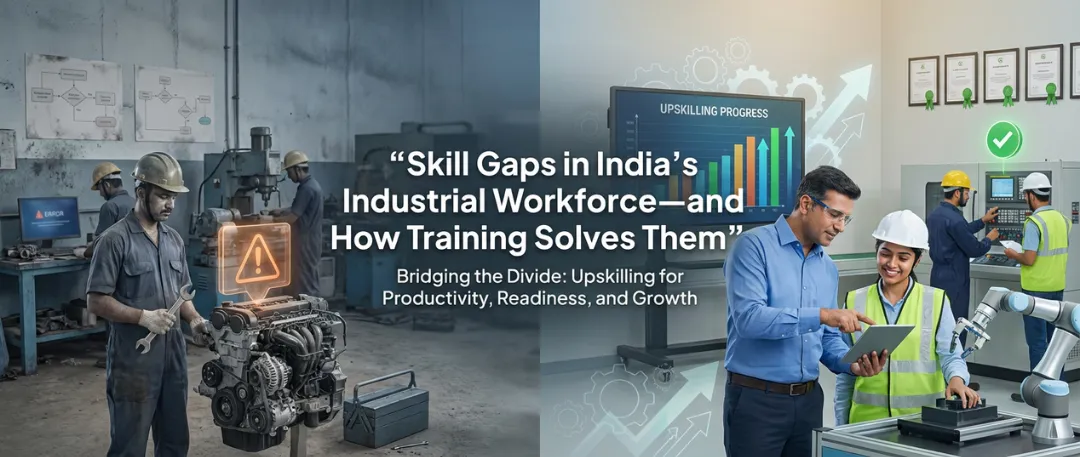
Atmanirbhar Bharat, rapid infrastructure expansion, and a growing manufacturing ecosystem, the demand for skilled industrial manpower has never been higher. Yet, across factories, construction sites, production units, and technical service industries, a persistent challenge continues to slow growth—the industrial skill gap.
Despite having one of the world’s largest workforces, Indian industries frequently struggle to find workers who are job-ready, technically competent, safety-aware, and aligned with modern industrial standards. This gap between industry requirements and workforce capabilities affects productivity, quality, safety, and profitability.
This is where industry-aligned training institutions like JRS Institute play a transformative role—not just by teaching skills, but by reshaping the workforce to meet real-world industrial demands.
Understanding the Industrial Skill Gap in India
A skill gap occurs when the skills workers possess do not match the skills employers require. In India’s industrial sector, this gap is not limited to advanced technology roles—it extends across core trades, shop-floor operations, machine handling, electrical works, fabrication, construction trades, and industrial safety.
The Paradox of Availability Without Employability
India produces millions of job seekers every year, yet industries report:
- Difficulty in hiring skilled technicians
- High attrition of trained workers
- Long onboarding and retraining cycles
- Frequent operational errors and safety incidents
The issue is not the lack of people—it is the lack of trained, job-ready professionals.
Key Skill Gaps Affecting India’s Industrial Workforce
1. Technical Skill Deficiency
Many workers lack hands-on exposure to:
- Modern machinery and tools
- Updated industrial techniques
- Electrical, mechanical, and fabrication standards
- Precision-based work requirements
Most traditional learning pathways remain theory-heavy, leaving workers unprepared for actual industrial environments.
Impact on industry:
- Reduced efficiency
- Increased machine downtime
- High rejection and rework rates
2. Safety Awareness and Compliance Gaps
Industrial safety is one of the most critical challenges across sectors such as manufacturing, construction, oil & gas, and heavy engineering.
Common gaps include:
- Poor understanding of safety protocols
- Improper use of personal protective equipment (PPE)
- Lack of hazard identification skills
- Non-compliance with site safety rules
Impact on industry:
- Workplace accidents and injuries
- Legal and compliance risks
- Project delays
- Increased insurance and compensation costs
3. Lack of Practical Exposure
Many workers enter the workforce with certificates but without:
- Real equipment handling experience
- On-site problem-solving ability
- Exposure to real-time industrial workflows
This gap forces employers to spend months retraining employees, increasing operational costs.
4. Soft Skills and Workplace Readiness
Industries increasingly expect workers to demonstrate:
- Basic communication skills
- Teamwork and coordination
- Discipline and professionalism
- Understanding of work ethics and responsibility
However, these aspects are often ignored in conventional skill training.
5. Rapid Technological Changes
Automation, digital tools, smart machinery, and process optimization are reshaping industrial operations. Workers trained on outdated systems struggle to adapt.
Impact on industry:
- Slower adoption of new technologies
- Underutilization of equipment
- Competitive disadvantage
Why Traditional Training Models Are Failing
Many skill development programs fail to deliver results because they are:
- Generic rather than industry-specific
- Designed without employer input
- Focused on certification over competence
- Detached from real industrial environments
Industries do not need just trained individuals—they need deployable professionals.
The Role of Industry-Oriented Training in Closing Skill Gaps
To solve industrial skill gaps, training must shift from classroom-based learning to industry-integrated, outcome-driven programs.
Effective industrial training should include:
- Hands-on practical learning
- Exposure to real tools and equipment
- Safety-first mindset
- Industry-relevant curriculum
- Continuous skill upgrading
This is where JRS Institute emerges as a critical solution partner for industries.
How JRS Institute Addresses Industry-Level Skill Challenges
1. Industry-Aligned Curriculum Design
JRS Institute develops training programs based on:
- Current industry requirements
- Employer feedback
- On-site operational needs
Courses are structured to ensure learners gain skills that industries actively demand, not just theoretical knowledge.
2. Hands-On, Practical Training Approach
At JRS Institute, practical learning is central—not optional.
Trainees receive:
- Real equipment handling experience
- Practical demonstrations
- Live simulations of industrial tasks
- Site-oriented skill exposure
This ensures students are work-ready from day one.
3. Strong Focus on Industrial Safety Training
Safety is embedded into every training program at JRS Institute.
Key focus areas include:
- Workplace hazard identification
- PPE usage and compliance
- Safety procedures and protocols
- Emergency response awareness
This creates a workforce that prioritizes safety, reducing risks for employers.
4. Skill Development Across Core Industrial Trades
JRS Institute offers training aligned with key industrial sectors such as:
- Electrical and mechanical trades
- Construction and infrastructure skills
- Fabrication and welding-related skills
- Industrial maintenance and technical support roles
This broad coverage allows industries to source trained manpower across multiple functions.
5. Bridging the Employability Gap
Beyond technical skills, JRS Institute emphasizes:
- Workplace discipline
- Communication basics
- Professional behavior
- Adaptability to industrial culture
Graduates are not just skilled—they are employable, reliable, and industry-ready.
6. Supporting Employers With Ready Talent
For industries, hiring from JRS Institute reduces:
- Recruitment time
- Training and onboarding costs
- Operational disruptions
Employers benefit from a talent pool trained to meet real-world production demands.
How Training Drives Industrial Growth at Scale
Improved Productivity
Skilled workers:
- Complete tasks faster
- Reduce errors
- Improve output quality
This directly enhances overall productivity.
Reduced Operational Risks
Safety-trained employees help:
- Lower accident rates
- Minimize equipment damage
- Maintain compliance standards
Faster Technology Adoption
A trained workforce adapts quickly to:
- New machinery
- Updated processes
- Automation tools
This keeps industries competitive.
Stronger Workforce Retention
Workers who receive proper training:
- Perform better
- Feel more confident
- Stay longer in their roles
This reduces attrition and stabilizes operations.
The Bigger Picture: Building India’s Industrial Future
India’s industrial ambitions cannot succeed without skill-first workforce development. Infrastructure growth, manufacturing expansion, and global competitiveness all depend on the availability of trained industrial manpower.
Institutions like JRS Institute act as the bridge between industry vision and workforce capability, ensuring that growth is not limited by skill shortages.
Why JRS Institute Is a Strategic Partner for Industry
- Industry-driven training programs
- Practical, hands-on skill development
- Strong safety and compliance focus
- Workforce readiness approach
- Commitment to quality and relevance
JRS Institute is not just training individuals—it is strengthening India’s industrial ecosystem.
Conclusion
The skill gap in India’s industrial workforce is not an unsolvable problem—it is a training problem that requires the right approach. By aligning education with real industrial needs, focusing on hands-on learning, and embedding safety and professionalism into every program, institutions like JRS Institute are redefining workforce readiness.
As industries evolve, the solution lies not in hiring more people—but in training better people. And that is where JRS Institute stands as a dependable solution to industry-level skill challenges.
FAQs
What is the main cause of skill gaps in India’s industrial workforce?
The primary causes include lack of practical training, outdated curricula, insufficient safety awareness, and minimal exposure to real industrial environments.
How does industrial training improve employability?
Industry-oriented training equips learners with job-ready skills, practical experience, and workplace discipline, making them immediately deployable in real roles.
Why is safety training important in industrial sectors?
Safety training reduces workplace accidents, ensures regulatory compliance, protects workers, and minimizes financial and operational risks for employers.
How does JRS Institute differ from traditional training centers?
JRS Institute focuses on hands-on learning, industry-aligned curriculum, safety-first training, and employability rather than just certification.
Can trained workers adapt to new technologies easily?
Yes. Properly trained workers with strong fundamentals adapt faster to new tools, machines, and processes.