
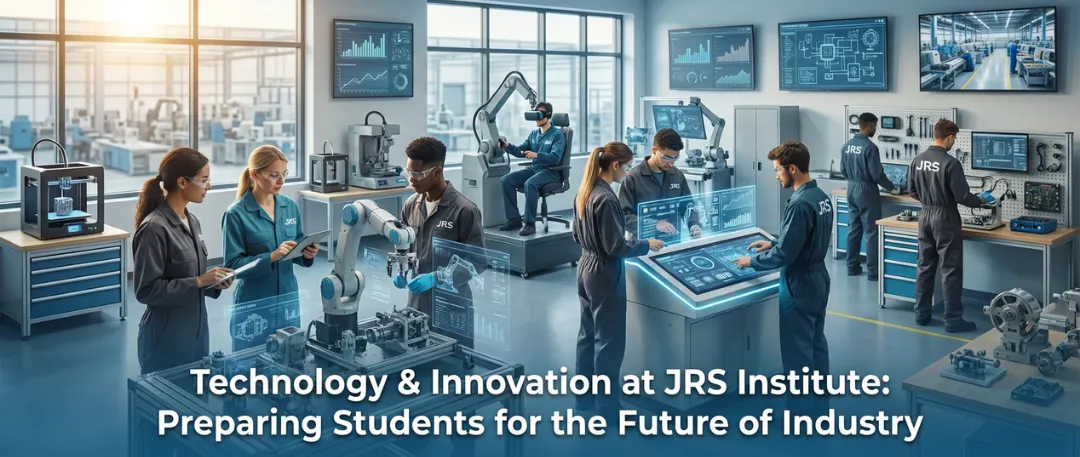
In today’s rapidly evolving industrial landscape, staying ahead requires more than traditional vocational skills. The integration of technology and innovative learning methods is essential for preparing students to meet global industry standards. At JRS Institute, technology and innovation are at the core of our training philosophy. We combine state-of-the-art equipment, digital learning tools, and modern teaching methodologies to ensure students acquire both practical skills and technological competence necessary for a successful career.
Embracing Modern Technology in Vocational Training
JRS Institute recognizes that industrial workplaces are increasingly technology-driven. From automated machinery to digital monitoring systems, students entering technical trades must be familiar with modern tools and processes. To address this need, JRS Institute has invested in advanced training equipment across all programs.
For example, in mechanical and electrical workshops, students work with CNC machines, digital multimeters, programmable logic controllers (PLCs), and other advanced tools. These technologies replicate real-world conditions, ensuring that students gain hands-on experience with equipment they are likely to encounter in professional environments.
Digital Classrooms and Interactive Learning
In addition to physical workshops, JRS Institute leverages digital classrooms to enhance theoretical understanding. Interactive screens, multimedia presentations, and simulation software allow students to visualize complex concepts before applying them in practical settings.
Digital learning platforms also offer access to e-books, instructional videos, and online tutorials, enabling students to revisit lessons at their own pace. This blended approach of combining hands-on practice with digital learning ensures a comprehensive understanding of technical subjects and accelerates skill acquisition.
Simulation and Practical Training Tools
Simulation technology plays a vital role in modern vocational education. At JRS Institute, specialized simulation tools are used to replicate real-world industrial scenarios in a controlled environment. For instance, electrical circuit simulators allow students to design, test, and troubleshoot circuits without risk, while mechanical simulation software helps students understand machine operations before working on actual equipment.
These tools enhance problem-solving abilities, encourage experimentation, and prepare students for the challenges they will face in professional settings. By using simulations, students develop confidence and competence, reducing errors and increasing efficiency once they enter the workforce.
Industry 4.0 and Smart Technology Integration
The rise of Industry 4.0 has transformed the expectations for skilled workers. Automation, robotics, and smart systems are becoming standard in factories and workplaces. JRS Institute ensures that students are not only trained in traditional methods but also exposed to these modern innovations.
Programs incorporate the use of sensors, robotics kits, and automation software to teach students about smart manufacturing and industrial IoT applications. By integrating these technologies into the curriculum, JRS Institute prepares graduates to thrive in technology-driven industries both in India and abroad.
E-Learning and Online Support Systems
Technology is also leveraged to provide continuous support and learning outside the classroom. JRS Institute offers online portals where students can access study materials, track progress, submit assignments, and communicate with trainers. This ensures that learning does not stop after class hours and encourages self-paced skill development.
The institute also uses virtual assessment tools to test student performance, providing instant feedback and personalized guidance. Such digital systems streamline training, improve accountability, and allow instructors to identify areas where students need additional support.
Innovation in Curriculum Design
At JRS Institute, innovation extends beyond technology to curriculum design. Courses are regularly updated to align with the latest industry trends, technological advancements, and international standards. For example, training modules now include instruction on smart electrical systems, renewable energy technologies, and advanced mechanical processes.
This forward-looking approach ensures that students graduate not only with foundational skills but also with expertise in the latest tools, techniques, and technologies relevant to their trade.
Supporting Innovative Projects and Research
JRS Institute encourages students to apply their knowledge creatively through innovative projects. Workshops and labs are designed to allow experimentation with new ideas, such as designing efficient circuits, building prototypes, or implementing automated solutions.
Faculty members mentor students in project work, fostering critical thinking and problem-solving skills. This culture of innovation nurtures future-ready professionals who are capable of contributing to technological advancements in their respective industries.
Collaboration with Technology Partners
To ensure exposure to cutting-edge tools and techniques, JRS Institute collaborates with leading technology companies and industrial partners. These collaborations provide students with access to the latest machinery, software, and industrial practices, giving them a competitive advantage in the job market.
Guest lectures, workshops, and hands-on demonstrations by industry experts allow students to learn directly from professionals, bridging the gap between academic learning and industry expectations.
Preparing Students for Global Standards
Technology and innovation at JRS Institute are designed to meet international standards, preparing students for both domestic and overseas employment. Training in smart systems, automation, and digital tools equips students with the skills demanded by employers worldwide.
By combining technological expertise with traditional vocational skills, graduates are better positioned to secure high-demand jobs, adapt to evolving workplaces, and succeed in competitive global markets.
Benefits of Technology & Innovation for Students
- Hands-On Learning with Modern Equipment: Students gain practical experience using the latest tools and machinery.
- Enhanced Problem-Solving Skills: Simulation and real-world scenarios develop analytical and critical thinking.
- Global Employability: Exposure to international technologies increases chances of overseas job placements.
- Self-Paced Learning: Digital resources and e-learning portals allow students to study anytime, anywhere.
- Confidence and Readiness: Continuous exposure to technology reduces learning gaps and prepares students for professional challenges.
Conclusion:
Technology and innovation are integral to the training philosophy at JRS Institute. By combining hands-on practical experience with modern tools, digital learning, and innovative curriculum design, the institute prepares students for successful careers in both national and international workplaces. With exposure to Industry 4.0 technologies, simulation tools, and smart systems, students gain the knowledge, confidence, and expertise required to excel in today’s dynamic industrial landscape.
faq
What types of technology are used in JRS Institute’s training programs?
The institute uses CNC machines, PLCs, simulation software, digital learning tools, robotics kits, and smart systems across different trades.
How do digital classrooms enhance learning?
Digital classrooms provide multimedia lessons, interactive simulations, and access to e-learning resources, helping students understand theoretical concepts before applying them practically.
Are students trained in Industry 4.0 technologies?
Yes, the curriculum includes automation, robotics, industrial IoT, and smart manufacturing concepts to prepare students for modern workplaces.
Does JRS Institute provide online support for students?
Yes, students can access online portals for study materials, progress tracking, assignments, and communication with instructors.
How does innovation in curriculum benefit students?
Innovative curriculum updates ensure students learn the latest technologies and industry practices, increasing employability and career readiness.
Are there opportunities for hands-on projects and research?
Yes, students are encouraged to work on practical projects, prototypes, and experimental solutions under faculty guidance.